"I would make up a lot of things and I would pass them off as truth. Probably just because that's the way I saw my father do it and I realized that my father wasn't being truthful and apparently that was okay."
— Bo Bennett, PhD
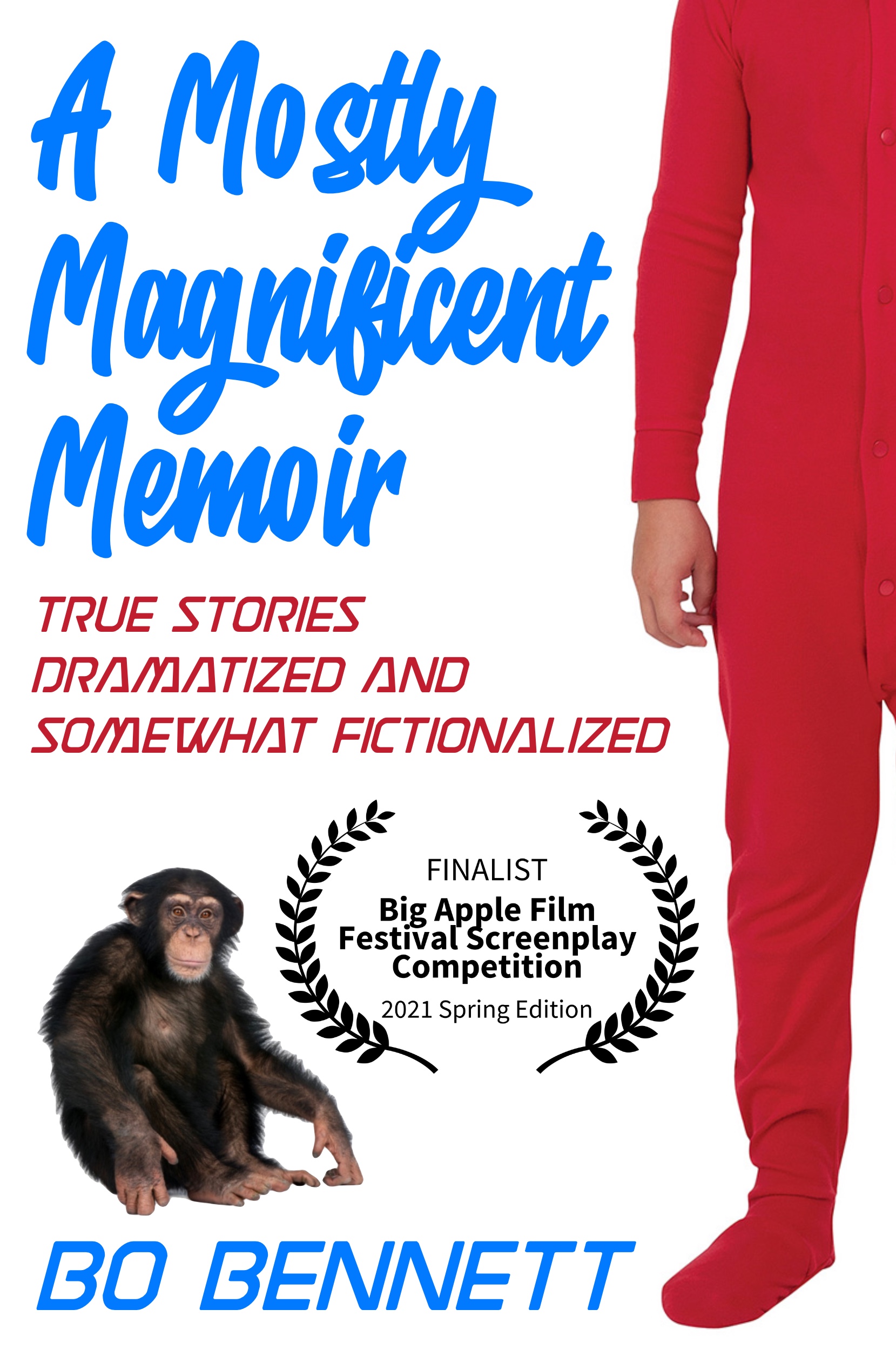
Prefer to hear the finished interview? Listen to the AuthorOnAir episode for A Mostly Magnificent Memoir.
In this episode
Bo Bennett, PhD, recounts how his father's creative storytelling shaped his own childhood relationship with truth. Growing up in a household where fabrication was entertainment, Bennett adopted the same habit of passing off invented stories as fact—until outsiders began calling him a liar. The turning point came when he told true but unbelievable stories that no one believed, forcing him to slowly rebuild credibility over time. Now a psychologist, he reflects on how attention and learned behavior drove his youthful dishonesty.
Highlights
- Father's 'creative' storytelling normalized dishonesty as family entertainment
- Social cost hit when outsiders labeled Bennett a liar, not family
- True stories dismissed due to established reputation for fabrication
- Attention and relevance reinforced the lying behavior among peers
- Gradual credibility rebuild required training family to trust again
Transcript
Host: Welcome back to AuthorOnAir; today we're exploring the Credibility Crisis with Bo Bennett, PhD, discussing the book "A Mostly Magnificent Memoir." Bo, you write about a childhood where you had "the credibility of your father." When did you first realize how his dishonesty was impacting how the world saw you?
Bo Bennett, PhD: Uh from a very early age, I noticed that uh that my father wasn't the most truthful person. And I think it was it wasn't that he he he was a um an evil liar. It's just he was very creative and he liked to tell stories and he liked to entertain people. And that often came at the expense of truth. Uh therefore, me being his son, that was off often passed on to me as well. And my credibility didn't mean much.
Host: So it was more about entertaining than deceiving, then? Did you find yourself adopting that same approach, passing off those creative stories as truth yourself, or was your fabrication driven by something different?
Bo Bennett, PhD: Not that was me. I would make up a lot of things and I would pass them off as truth. Probably just because that's the way I saw my father do it. And I realized that my father wasn't being truthful and apparently that was okay. So that's what I started doing.
Host: So, if that was the norm, how did you make the distinction between when you were just playing with your imagination versus intentionally trying to pull one over on someone? Was there a point where you recognized that boundary shifted?
Bo Bennett, PhD: I think it's when people would start saying things to me that were outside of our family. Like, what are you talking about, Bo? This is a lie. Uh, and like calling me a liar and accusing me of doing something wrong. Then it started to, to really, uh, it started to hit me that what I was doing was indeed wrong.
Host: So the social cost became clear when outsiders started questioning you. Before that, was there any internal conflict or did you feel like you were just following your father's lead like it was a family business, so to speak?
Bo Bennett, PhD: Yeah, I uh I really didn't have any internal conflict. I just thought it was uh this is the way you behaved and if if you wanted to say something, you just say it. If you had a good idea or if you had a funny story in your head that you wanted to make up, you pass it off as truth and and that's the way the world works.
Host: That really paints a picture of how normal that was for you growing up. For listeners just joining us, I'm speaking with Bo Bennett, PhD about his book "A Mostly Magnificent Memoir," exploring childhood, credibility, and the blur between fiction and reality. Bo, thinking about that lack of internal conflict, was there ever an instance where you told a story that was actually true, but because of that established reputation, no one believed you?
Bo Bennett, PhD: Yes, and that was the the point of the chapter in the book. I have several instances of very entertaining stories where things really happened that were otherwise unbelievable. Like no matter who told the story, they would say, "Yeah, are you sure about that? Did that really happen?" Uh but they really did. And when I would tell that story, nobody believed me. And that's that's kind of where the chapter goes. It It follows this interesting arc of me telling this outlandish story to my family, nobody believing me. And then it turning out to be true and everybody being shocked.
Host: That's a powerful moment of vindication. But when that happens, does it change the underlying dynamic, or does the default skepticism stick around even after a "truth" wins out? How did your family respond after that was proven true?
Bo Bennett, PhD: I think it was it was more of a uh you know you slowly train people and you say okay Bo typically lies and this time he's not lying so maybe we can assume he's lying all the time we have to give him the benefit of the doubt sometimes and I think that's kind of what happened and then over time as I grew up and kind of grew out of the story phase let's call it instead of a lying face um I started to to get a a new sense of credibility with with my family.
Host: So it was a gradual training process, earning back that credibility. Now, as an adult with a PhD in psychology, how do you view that period of your childhood? What insights have you gained about why you passed off those stories, and the impact it had?
Bo Bennett, PhD: Well, it was a combination of things. One it had to do with again just um emulating my father and his behavior and assuming that it was the norm because essentially I didn't know any better. Nobody ever corrected me or my family didn't correct me at the time for for passing off a lie as the truth. So, it was just a a behavioral thing. Um and I also I was getting the same benefit as my father was getting. When I would tell these outlandish stories to my friends and other people, they would be amazed and all the attention would be on me and I would feel good about that. Uh I was relevant to them and it's a way to get attention and to to um just stay relevant with within your friends group and it worked.
Host: So it was about relevance and attention, learned behavior and positive reinforcement from the outcome. That makes a lot of sense. Before we go, where can readers find "A Mostly Magnificent Memoir" and where can they find more of your work?
Bo Bennett, PhD: They could find my book at bowbennett.com. It's also available at virtually any bookstore that you could find online. Uh you could just ask for it, Google it, you'll find it. And that's where you can find my work as well, bowbennett.com.
Host: Thank you for sharing that, Bo, and thanks to everyone for listening. Join us next time on AuthorOnAir. AuthorOnAir signing off.