"I kept the basic stage direction, but you'd have to kind of novelize it in a way. You'd have to explain in human language that the character is walking into the room."
— Bo Bennett, PhD
In this episode
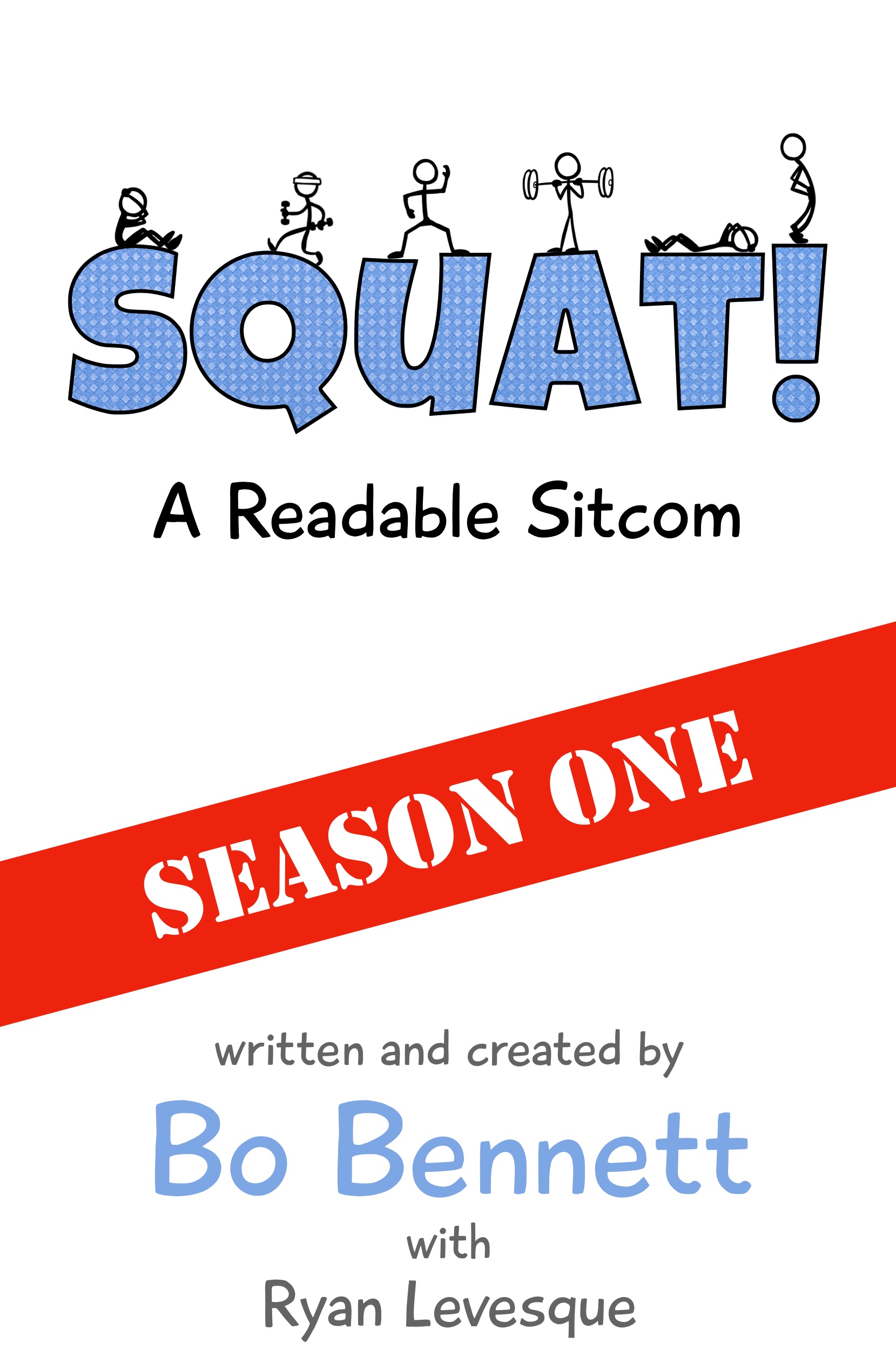
Bo Bennett discusses Squat, a novel written in screenplay format that bridges the gap between traditional fiction and visual storytelling. Bennett reveals the book began as a screenplay and was inspired by a childhood picture-book adaptation of Grease. He explains how he preserved comedic timing while adapting stage directions into prose, ultimately using the book as a stepping stone to create a ten-episode animated series on YouTube. The conversation explores the creative challenges of maintaining humor across different formats.
Highlights
- Squat began as a screenplay inspired by a childhood Grease picture book
- Bennett adapted stage directions into prose while preserving comedic timing
- The book served as a bridge to a 10-episode animated YouTube series
- Visual humor opportunities emerged only during the animation process
- Some readers prefer the book's imaginative experience over the cartoon
Transcript
Host: Welcome to AuthorOnAir. I'm Eleanor Bright. Today, we're delving into the fascinating world of The Sitcom-as-Novel Experiment, and I'm joined by Bo Bennett, PhD to discuss the book "Squat!". Bo, this book really pushes visual boundaries, including stage directions and a present-tense structure. What did writing in that format unlock for you?
Bo Bennett, PhD: It was all about actually creating a screenplay. And that's how it began. I I wrote this as a screenplay. And then I said, "You know what? Why not make it a book, but make it as a screenplay-ish book?" And this actually came as a result of a a book that I read as a kid. I read the uh the book Grease. Um based off the movie. And it was basically the movie. It was a picture book with some with some text and speech bubbles and and I just love that book because I I like the way it it it flowed. And maybe it was the immaturity and the fact that I was like an eight-year-old. But But I really did enjoy it. And that's what made me want to write Squat in that direction.
Host: That's so interesting that it came from a book you loved as a child. So, when you were translating that screenplay style to the book, how did you think about preserving the comedic timing or visual gags that were central to the original idea?
Bo Bennett, PhD: Well, I kept the basic stage direction, but instead of what you would see in a screenplay, like, for example, uh, character one enters stage left, you don't put that in a book. You would have to kind of novelize it in a way. You'd have to explain in human language that, uh, the character is walking into the room, and so it's just a matter of rewording things. And by doing that, as long as you're true to the script, then all the comedic timing still works beautifully.
Host: So, it sounds like there was a real dance between providing visual context and giving the reader's imagination room to play. Did you ever worry that sticking too closely to the screenplay structure might feel limiting, or do you feel like that constraint actually helped define the book's style?
Bo Bennett, PhD: I think a little bit of both. Uh it was limiting at times, but at those times as the author, as the one in charge, I could easily change it, which I did. There were some times when I saw something that wouldn't quite work, and I changed it a little bit. to make it work. in uh in in the book format. So, so that that wasn't limiting in that in that way. And in in terms of constraint, uh that did actually help because I wasn't rewriting the story. I was just basically transferring it from a screenplay to a book.
Host: You mention being in charge, so when you made those changes, were those choices mostly to clarify the plot, or about making sure the humor landed properly on the page without the visual medium?
Bo Bennett, PhD: It was pretty much all about the humor. Uh the the the plot is is pretty strong and it stays intact throughout the going back and forth between the screenplay and the writing. Uh the like the the book itself, but it's the humor, that's the part that had to be kind of massaged at time in order to in order to be maintained.
Host: For listeners just joining us, I'm speaking with Bo Bennett, PhD, about the book "Squat!"—today on the theme of The Sitcom-as-Novel Experiment. So, Bo, if preserving the humor was key, was there a particular type of joke—maybe a visual gag or one with props—that you found particularly challenging to adapt?
Bo Bennett, PhD: Not really, because with the magic of words, you can really describe anything. Now, I I say that with a caveat, and and that is I went from screenplay to book format, so there wasn't a heck of a lot of difference there. But I also ended up going from screenplay directly to video. And creating this as an animated comedy, and it's available on YouTube, the whole uh 10 series, the whole 10 episode series. So, when I did that, there were a lot of changes. I discovered many areas that I could add visual humor that wouldn't quite work in the screenplay or the book, or basically, I just didn't even notice. I didn't I didn't see those opportunities until I actually started creating this the uh the cartoon, the animation itself.
Host: That's fascinating about the animated storyboard. Since you created that, and now you have the book, do you see those versions as competing or complementary, like different ways to experience the same story, or do you consider the book the primary, definitive work?
Bo Bennett, PhD: No, the the book was just a intermediary step to actually get me to the animated sitcom. Uh, which it did. It served its purpose well. And don't get me wrong, the book is extremely enjoyable and many people prefer to read than they do watching, especially uh, what they may call cartoons or animated comedies. Uh, people, some people just aren't into that when they will really enjoy the reading experience and being able to use their imagination to kind of fill in the gaps.
Host: So, the book served as a valuable bridge toward the final visual creation. Thinking back to that adapter role you had, which creative choice are you most proud of having made during that process, looking back now?
Bo Bennett, PhD: Oh boy, there were a lot of creative choices that I made. Which one was am I the most proud of? I I I can't really give you an answer to that besides saying that after watching the sitcom over and over again, many times, I'm extremely happy with all of the choices I made.
Host: That's a nice place to arrive at, feeling pride in the overall journey of adaptation. Before we go, where can readers find "Squat!"—and where can they find more of your work?
Bo Bennett, PhD: You can find more about Squat in e-bookstore, um, online or, uh, brick and mortar. You could just ask the, the people behind the desk to grab you a copy or get you a copy. They'll probably have to order it. Um, and in terms of finding out more about my work, you could go to bowbennett.com. That's b o b e n n e t t.com. That's my author website where I have all my books.
Host: Thank you, Bo, and thanks to all our listeners for joining us. AuthorOnAir signing off.
Related AuthorOnAir episodes: To hear Bo Bennett discuss his nonfiction work, listen to Logically Fallacious and The Biased Brain.