"Lazy thinking is easy, and that's why most people do it. Critical thinking, what some call the level two thinking, is much more difficult."
— Bo Bennett, PhD
In this episode
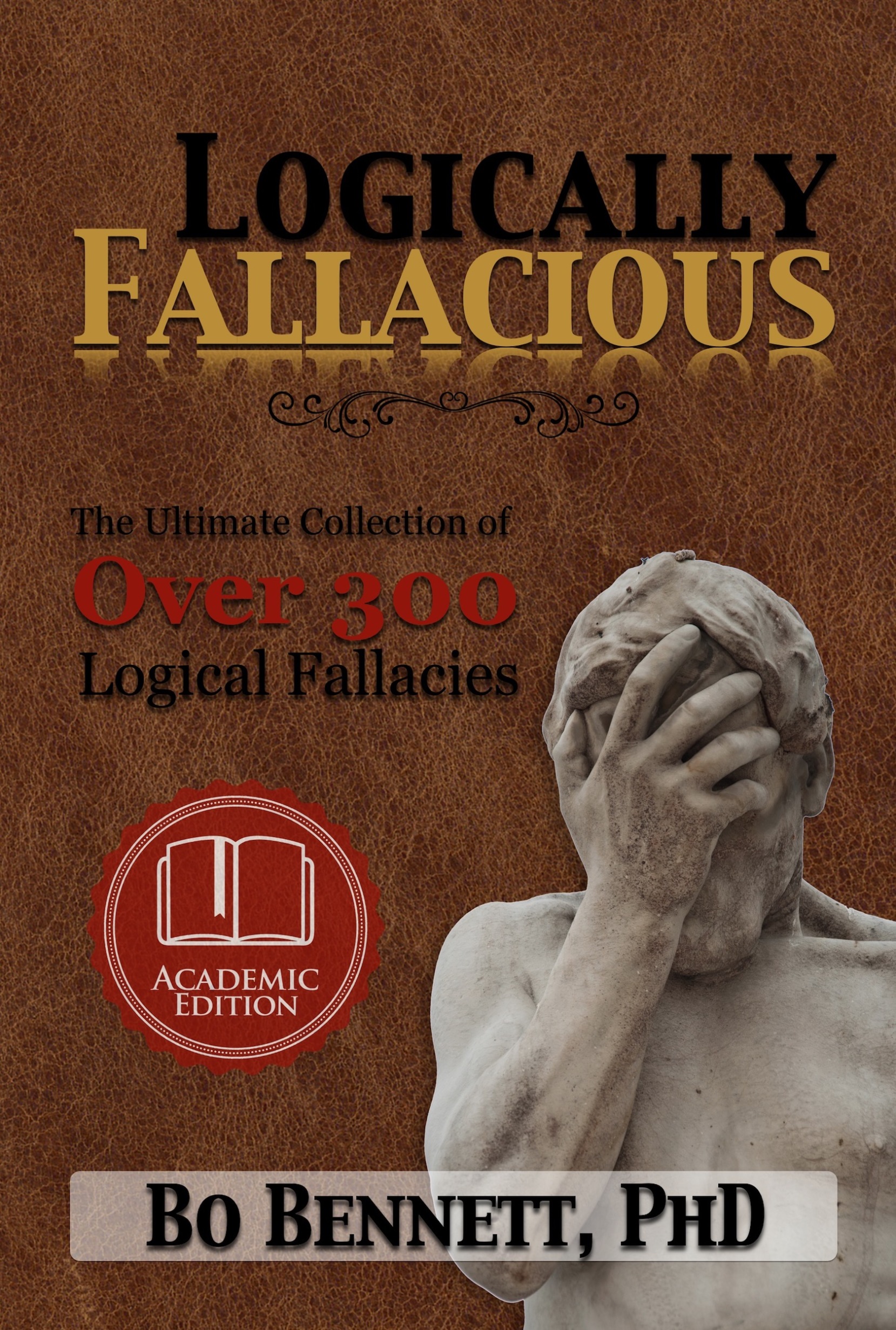
Bo Bennett, PhD, discusses his book Logically Fallacious and the erosion of truth in public discourse. He explains that the 300-plus fallacy encyclopedia is designed to be read cover-to-cover, not just consulted as a reference. Bennett highlights the strawman fallacy as particularly common and contrasts it with steelmanning—accurately restating an opponent's argument before responding. He acknowledges that most people lack the desire, not the ability, to think critically, and admits he often feels alone in pushing for accountability around false information.
Highlights
- Bennett contrasts strawman fallacies with steelmanning—restating arguments accurately
- The book contains over 300 fallacies, meant to be read cover-to-cover
- Most people avoid critical thinking due to lack of desire, not ability
- Bennett often feels alone in holding others accountable for false information
- The line between perceived truth and actual truth has blurred significantly
Transcript
Host: Welcome back to AuthorOnAir. I'm Eleanor Bright, and today we are talking about the need for a comprehensive fallacy encyclopedia, specifically the book "Logically Fallacious". Our guest is Bo Bennett, PhD. Bo, the book opens with a pretty bold claim about our world being "post-truth". What was shifting in the culture or politics that made this kind of reference feel urgent?
Bo Bennett, PhD: I don't think it was anything that shifted. This is the way it's been for a long time, at least in my lifetime and when I was paying attention. But I think anybody who was living in the past decade has seen something scary happen to our society, in that truth seems to be what you make it, or what you want to make it. Or what you want it to be. And that's not the way reality works. So there's a difference between a perceived truth and actual truth. And that line has blurred significantly. And that's the scary part.
Host: You speak about that blurring of the lines very clearly. Do you feel like the book is primarily a reference tool for when arguments get stuck, or do you have a hope that readers can internalize some of these concepts?
Bo Bennett, PhD: Definitely a bit of both, but more so on the internalizing the concepts. It's important to read them, read it like a book. As opposed to an encyclopedia where you just look things up. But just go through it cover to cover. Um on your own time, of course. You don't have to read it all in one sitting. It's a big book. But go through and think about what it actually means, what the fallacy means, what it's about. Um think about times in your life when you may have used that fallacy. Or when you argued with somebody and they use that fallacy. Now you could say, ah that's what that person is doing. And you could identify that and you could now call out the problem in their reasoning. And you'll be better informed and hopefully you'll inform others and you'll have better arguments.
Host: You make it sound like a very active process for the reader. Is there a particular fallacy that you find people most commonly fall into, perhaps in everyday conversations?
Bo Bennett, PhD: I would probably say the number one fallacy is the straw man fallacy. And that's when you want to take down somebody else's argument. So you create a almost farcical version of the argument that's really easy to defeat. And that's not the argument that the other person is making, but it makes you look good because you're knocking down that argument. And the other person just gets frustrated and you're not getting anywhere because you're not communicating about the same actual argument. That's why one of the techniques in good critical thinking and argumentation is the opposite of that. It's called steel manning. And in that what you want to do is you want to do your best sincere, um, give it a really sincere effort to try to understand the other person's argument and rephrase that argument back to them and say, okay, so is this what you were saying? You want the other person to say, yes, that's exactly what I'm saying. And then you argue based on that. So the the real version of the argument and not some fake straw man that you could easily knock down.
Host: Bo, that distinction between strawman and steelman is so illustrative of what the book aims to teach. For listeners just joining us, I'm speaking with Bo Bennett, PhD about the book "Logically Fallacious" — today on the theme of Why We Need a 300+ Fallacy Encyclopedia Now.
Bo, thinking about that steelmanning process, it seems to require a lot of mental energy. Do you think the average person can realistically internalize even your 'Top 25' list, or is this mostly a reference tool?
Bo Bennett, PhD: Well, if to your first question, do you think the average person can internalize it? Um, I I say yes, they can. Will they? No. I think the average person doesn't have that level of critical thinking, or I should say they don't have that level of desire to really critical think and think critically and internalize uh these different concepts. But that's kind of what this book is about. It's it's a tool, it's a training tool. As you understand more and you read more, you'll get better at it, and that desire to internalize and to fully understand starts to build. So then they will do it. Uh right now, it's not really a lack of mental ability, it's the lack of desire that that most people have. Lazy thinking is easy, and that's why most people do it. Uh critical thinking, what some call the level two thinking, is is much more difficult, takes a lot more energy, and it's really not very enjoyable for a lot of people because it's it's difficult. And people typically like to take the easy way out of things, and that includes thinking. So, uh that's when it comes to internalizing, that's my answer on that. Um, you ask about a reference tool, is it a reference tool mostly? It depends. It certainly can be. But again, I do hope that uh people read it from cover to cover.
Host: You paint a really fascinating picture of the motivation behind the work — this interplay between desire and ability and plain old laziness. It makes me wonder if you see this book as part of a broader movement toward better critical thinking, or if you feel more alone in that effort.
Before you answer that, before we go, where can readers find "Logically Fallacious" — and where can they find more of your work?
Bo Bennett, PhD: Well, they could find um my book in any bookstore, anywhere you sell they sell books online, or if you go to a brick and mortar store, you could ask for Logically Fallacious, and they should be able to get it for you no problem. You can find more about my work at bowenpdf.com. Now, to your question you asked um if this is the book is more part of a broader movement toward uh better critical thinking, or if I'm alone in my effort, if I feel like I'm alone in my effort. Um very often I feel like I'm alone. in the effort, to be honest. And it's it's annoying, um but I also think that there is at least the beginning of a movement. I think people have had it with this fake reality and the lying and the deception that's going on, and people want to know what's true. Uh I just don't see a lot of people, or media outlets for that matter, holding others accountable to false information. And once I see that, and I see a clear sign of that, then I would confidently say it's part of a broader movement. But really until then, I'm uh I feel like I'm alone.
Host: Thank you, Bo, for sharing your thoughts and insights on the book and the state of discourse today. And thanks to everyone for listening. That's all for this week. AuthorOnAir signing off.
Related AuthorOnAir episodes: Continue the critical-thinking thread with The Biased Brain, then shift to Bo Bennett's fiction experiment in Squat!.