In this episode
Bennett spent six years creating what amounts to a cognitive bias encyclopedia. This is a fascinating editorial decision—most psychology books focus on a handful of biases. Why did he choose comprehensiveness over depth? What did he learn about the interconnected nature of biases by cataloging so many? This could reveal his philosophy about how readers should engage with bias literature—as reference material rather than linear narrative.
Transcript
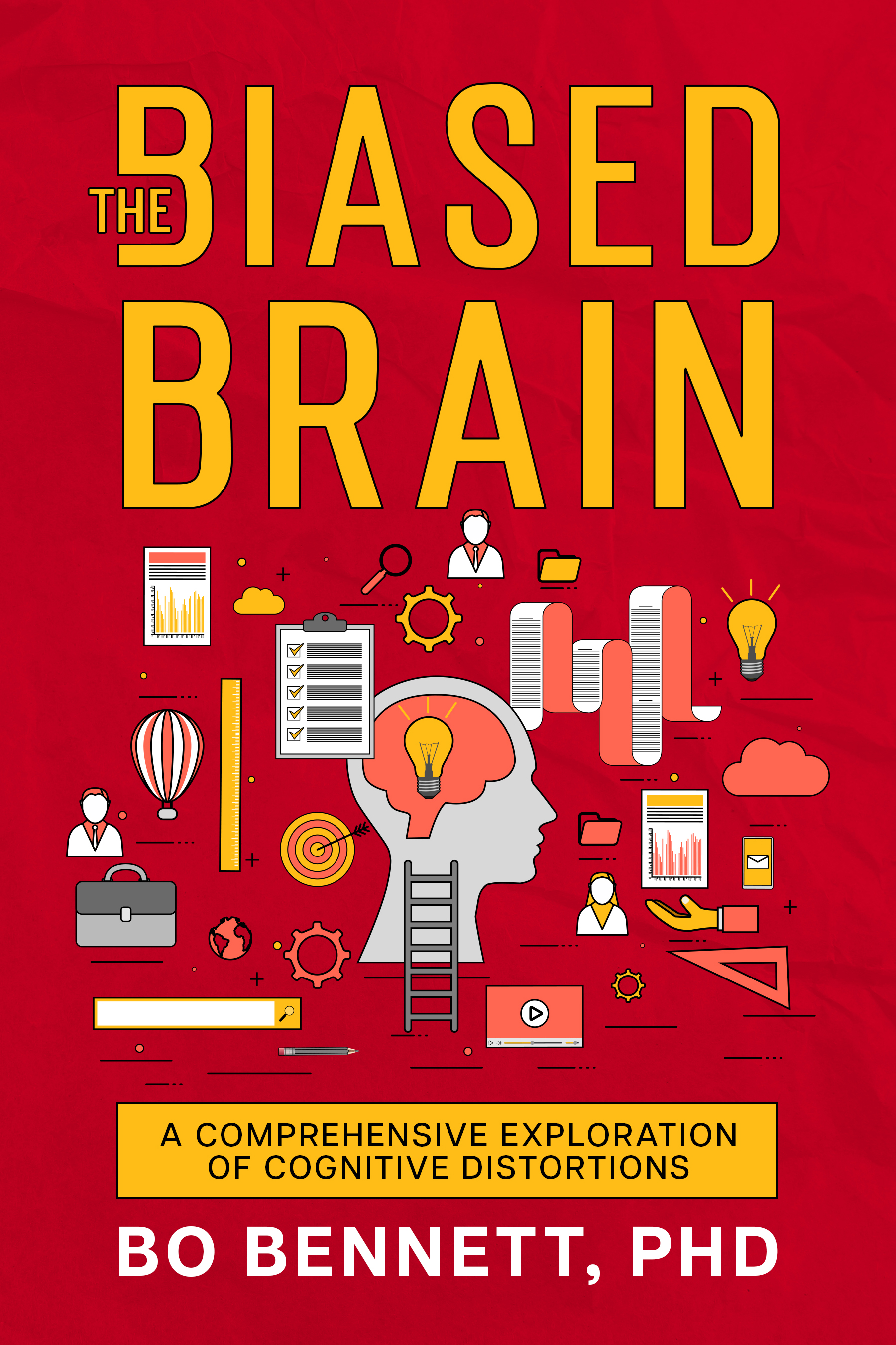
Host: Welcome back to AuthorOnAir; I'm Marcus Hale. Today, we're exploring what might be called the encyclopedia approach to the mind. Joining us is Bo Bennett, PhD, author of "The Biased Brain". Bo, you've cataloged over 200 biases in this work—a massive undertaking. Most books focus on a handful. What led you to choose breadth over depth, and how do you imagine readers will engage with this collection?
Bo Bennett, PhD: Well, I decided to choose the breadth because there are plenty of books already that go into detail with just a few biases. And don't get me wrong, those are fine, but in order to be a really good critical thinker, you need to have a much wider library available to of the different biases. So you recognize them when you see them, or when you encounter them, I should say, in real life. So I thought it was more important to give a overview, not a really in-depth analyses of of every bias, but a very good overview so people know 90% of what they need to know about the bias. Or more like 100% of what they need to know, but 90% probably of what there is to know of importance about the bias, and and just go from there. So I I think it's um, I think it's the book worth reading about cognitive biases.
Host: That makes sense, providing a sort of mental library, as you say. You spent six years compiling this. Did cataloging so many reveal any unexpected patterns or linkages between them that surprised you? Perhaps overarching categories you hadn't anticipated?
Bo Bennett, PhD: Well, it's interesting that you mentioned the six years. Did I spend six years or was it more like 54 years? Each year for my life that I experience them. Um, so it it's, yeah. Okay. We'll We'll call it six years, whatever. But the point is, it it really is a lifetime of collecting these, uh, these mental inadequacies, these these little mental tricks that your mind plays on you. Uh, that's what I've been doing. Uh, cataloging them was challenging because, like logical fallacies, there are so many ways you could connect them to, uh, like if you try to categorize them, categorize them by what? Um, usually by, by like maybe the part of the brain or the the the part of the brain that actually is, is, I wouldn't say malfunctioning, but the part of the brain that's deceiving you. Um, or do you do it by the outcome? Like are they belief biases, or are they something else? Um, so we we could look at all of that, and it turns out that they're all connected in some way, and in many ways. So I just said, you know what? Let's stop trying to make this false taxonomy, and let's just throw them in there, uh, alphabetically, and see how that works. And that's exactly what I did, and it turned out well.
Host: A lifetime of observation, then, formalized into six years. That's a rich perspective. You decided to abandon categorization by function, settling on alphabetization precisely because they overlap and interconnect so much. That's compelling. It suggests we shouldn't think of them as discrete boxes, but more like a web of interrelated tendrils...
I'm speaking with Bo Bennett, PhD, about their book "The Biased Brain"—today on the theme of The Encyclopedia Approach.
Bo, when readers pick up this guide, how do you hope they avoid becoming paralyzed by the sheer volume of biases? Is there a way to engage with it functionally, without getting overwhelmed?
Bo Bennett, PhD: Yes, and that is just read a page a day. Or two pages a day. Or just pick something. You don't have to rush through it. It's not like a novel where you need to find out what's going to happen next. I'll tell you what's going to happen next. You're going to get to the next bias. Uh it's as simple as that. So, you just just go through it and just read and be comfortable. And and think about it, too. Just kind of digest it. Think about what the bias means. Think about the times in your lives when when you might have faced that bias. Uh how it affects you personally. That's always a good thing to do. So, don't Yeah, don't get overwhelmed. It's a big book. It's a thick book. But treat it more like an encyclopedia rather than a novel. And uh in enjoy reading it, of course. But um but do it at your own pace. Relax. Have fun.
Host: Treating it like an almanac then—a resource to dip into, rather than a narrative to power through. That seems very practical. You mention facing these biases in our own lives. Are there specific ones you've focused on yourself since finishing the book, trying to become more aware of in your everyday thinking?
Bo Bennett, PhD: I would have to say no to a specific one, but yes to all of them. Certainly writing the book you become more aware of all biases and uh and that's what I've done. And it's just um it it's it's really a good way to approach critical thinking and to approach life in general. Is is having this knowledge of cognitive biases and the recognition of them when you see something happening and you see the way you start to think about something and you catch yourself and you say, "Oh, wait wait a minute. Uh this is the confirmation bias and I know that because I read it in Bo's book." And then you could even go back to it and you could brush up on it and say, "Yeah, that's what's going on here. And now that I identified the bias, I could think more clearly now that I know that that my brain isn't um working towards perfect logical reasoning. So something's going askew there." Once you recognize that, that of course is the um the first step.
Host: The first step, absolutely. That awareness allows you to pull up short and correct course. It's interesting to hear you say it's about heightened awareness across all of them, rather than focusing on one pet bias. Before we go, where can readers find "The Biased Brain"—and where can they find more of your work?
Bo Bennett, PhD: Well, you can find my book anywhere fine books are sold on the internet. That's for sure. And even if you go to your local book shop, they may not have it there on the shelf because let's face it, uh bookshelf is limited. But you could ask them for it and they could order it for you if you want a physical copy. If you're one of those type of people who like the uh physical copies holding it in their book and holding it in their hands, uh then that is great. Uh where could they find out more about my work? Go to bowbennett.com. That is my hostingauthors.com book site where I have all of the books that I have personally written. They can find them there.
Host: Excellent. Bo Bennett, author of "The Biased Brain," thank you so much for joining us today. And thanks to all of you for listening. I'm Marcus Hale, and this has been AuthorOnAir. Until next time, think critically.
Related AuthorOnAir episodes: For the companion fallacy project, listen to Logically Fallacious. For a very different Bo Bennett book, hear Squat!.